
Dela
Subtitle: Letting AI developers pick their own safety auditors creates a conflict of interest. Requiring liability insurance instead would put insurers’ own capital behind risk assessments.
Gabriel Weil, Professor at the University of Houston Law Center — July 29, 2026
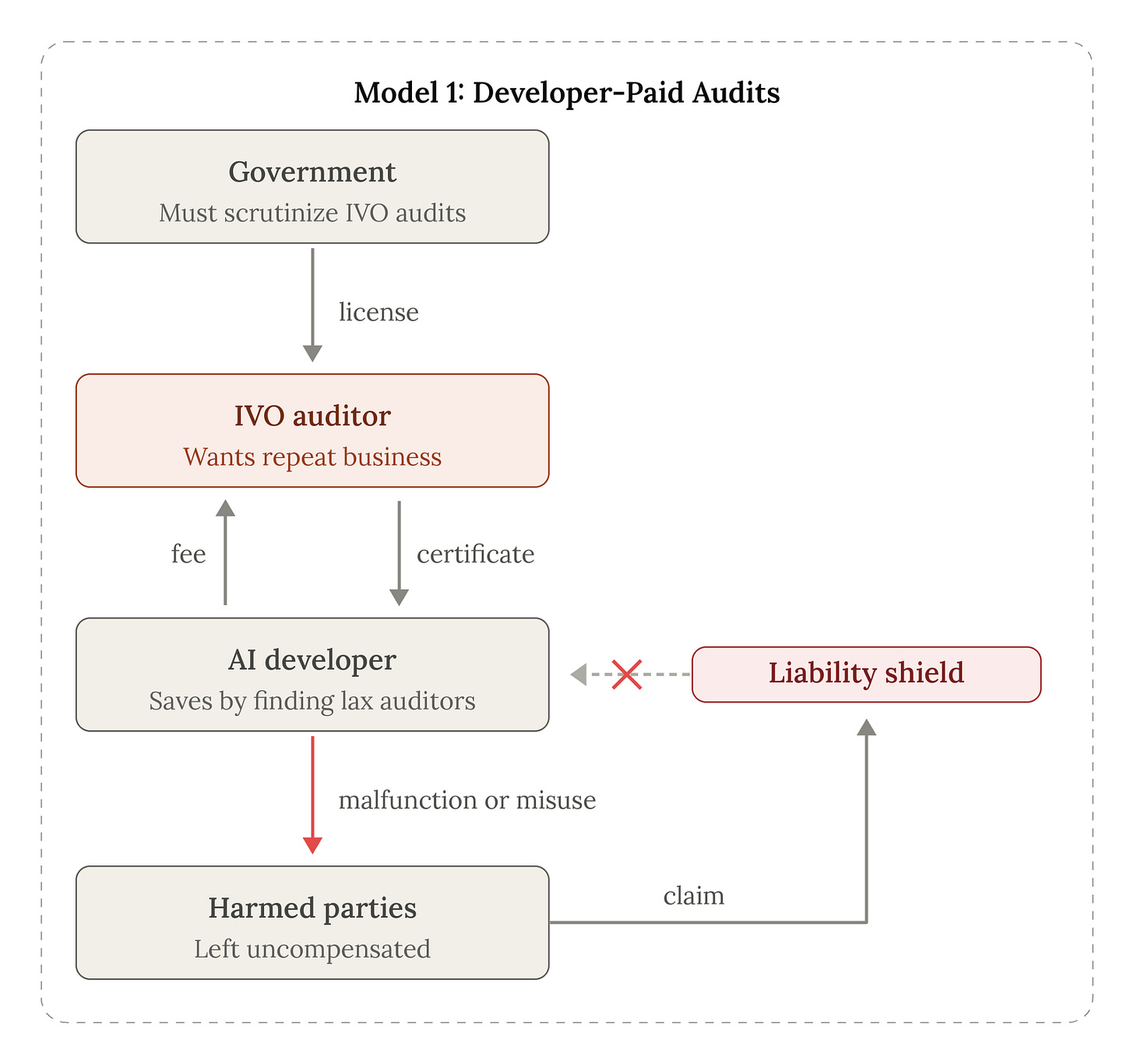
A growing chorus of scholars and policymakers favors letting private organizations—rather than a government regulator—govern frontier AI. In the leading family of proposals, the state sets the safety outcomes it wants and licenses independent verification organizations (IVOs) that compete to certify developers against those outcomes. Gillian Hadfield has developed the idea as “regulatory markets,” in which AI developers must pay for oversight from private regulators that governments license and hold accountable for safety standards. Dean Ball, who likens the arrangement to bank supervision, has argued for a version he calls “private governance,” which a nonprofit named Fathom has converted into model legislation. The rationale is that legislators and agencies are poorly positioned to write good safety rules for frontier AI: they understand these systems less well than the labs building them, and rules fixed in advance cannot keep pace as the technology changes. Private verifiers, meanwhile, are closer to the technology than any agency and are disciplined by [...]
---
Outline:
(03:12) Building the Right Incentive Structures
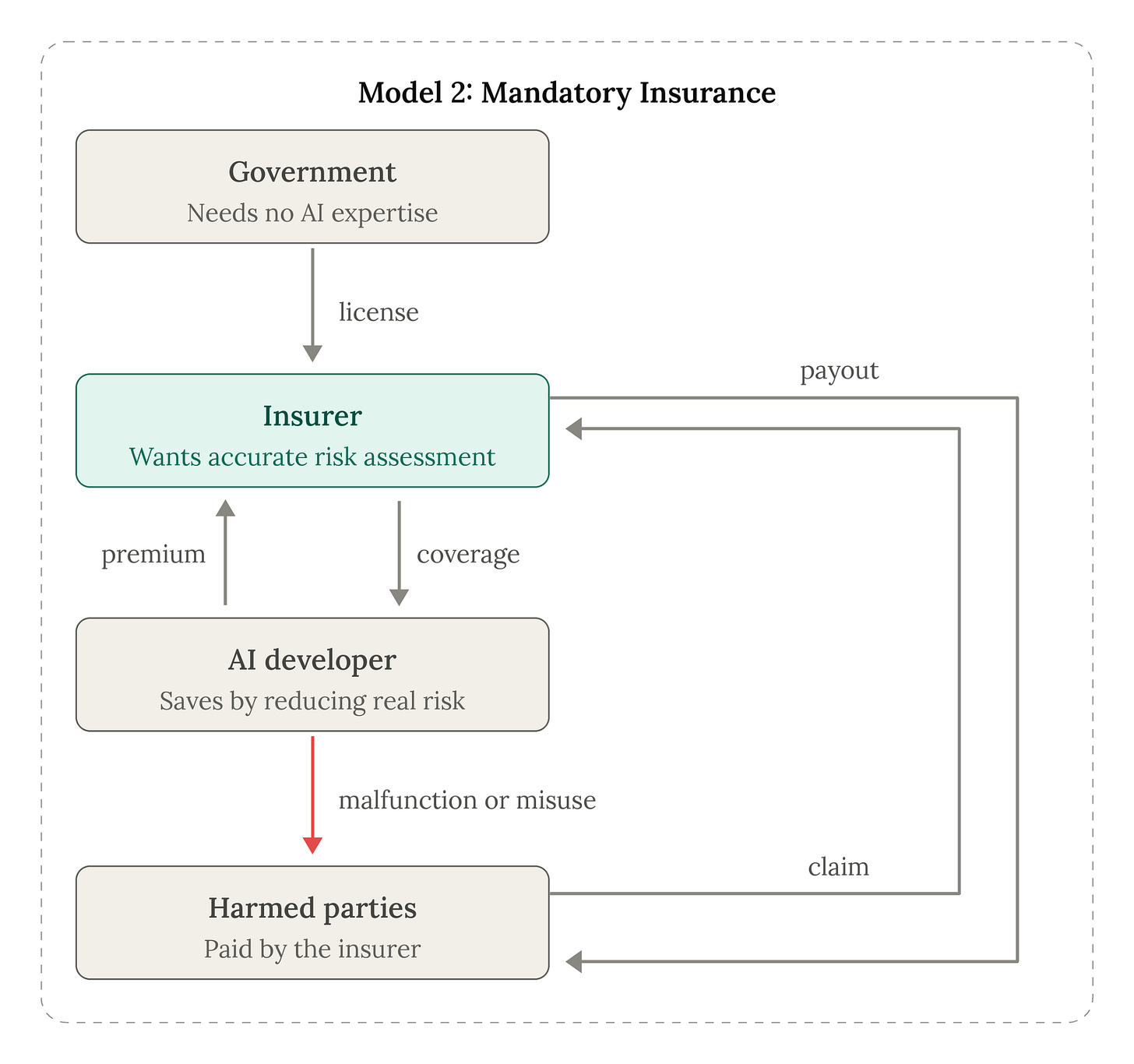
(08:15) A Mandatory Insurance Model for AI Governance
(12:23) Objections to a Mandatory Insurance Model
(20:41) Mandatory Insurance Is a Better Form of Private Governance
(22:38) Discussion about this post
(22:42) Ready for more?
---
First published:
July 29th, 2026
Source:
https://newsletter.ai-frontiers.org/p/dont-let-ai-developers-hire-their
---
Narrated by TYPE III AUDIO.
---
Images from the article:
Apple Podcasts and Spotify do not show images in the episode description. Try Pocket Casts, or another podcast app.
Avsnitt sparat!
Du hittar sparade avsnitt på Mina sidor.
Kunde inte spara avsnitt
Något gick fel. Försök igen.