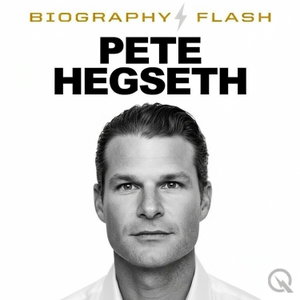
Pete Hegseth Biography Flash a weekly Biography.
Pete Hegseth has spent the past few days exactly where a war-time Defense Secretary both loves and dreads to be: in the glare of cameras, under the klieg lights of Congress, and at the center of a raging argument over money, strategy, and his own judgment. According to NPR and CNN, Hegseth’s high‑stakes appearance on Capitol Hill this week was his first public grilling in months over the escalating U.S. war with Iran, and he used it to press for what he pitched as an “urgent” supplemental request in the ballpark of 67 to nearly 90 billion dollars to replenish munitions, fuel, and equipment and keep the Pentagon’s broader budget surging toward 1.5 trillion. NBC News and the BBC report that Hegseth put a hard number on the Iran conflict so far: 37.5 billion dollars in costs, a figure now etched into any future biography as the price tag of his war.
That testimony did not unfold quietly. The Hill and independent outlets like The Independent describe hours of contentious questioning from skeptical senators, with Hegseth at one point visibly unraveling under repeated demands to explain his endgame in Iran and why the money keeps climbing while clarity does not. Anti‑war protesters interrupted the hearing, chanting and accusing him of “bombing our children” in Iran and Palestine, underscoring how Hegseth’s legacy is being written not just in defense ledgers but in street‑level outrage. Local broadcasters and social clips magnified one flashpoint exchange with Rep. Chris Deluzio at a related House hearing, where Hegseth reportedly lost his cool when pressed on costs and strategy, feeding a narrative of a volatile secretary struggling to defend a grinding war.
Alongside those fireworks, an appeals court handed Hegseth a quieter but highly consequential win. The Washington Times and Reuters report that the D.C. Circuit paused a lower‑court ruling and sided with the Pentagon’s policy requiring journalists, including New York Times reporters, to be escorted inside the building. For Hegseth, who has fought to tighten media access under the banner of national security, this decision marks a significant legal and institutional victory that could shape how future histories describe his relationship with the press.
Recent commentary in outlets such as The Guardian and The Hill continues to pick apart his earlier testosterone‑screening program for troops and his overall stewardship of the Iran war, painting him as ideologically driven, obsessed with “high‑T war fighters,” and dangerously loyal to Trump. These are opinions rather than hard facts, but they signal a growing chorus that may frame Hegseth’s public image long after the current hearings fade. Social media discussions on X and Facebook over the last few days largely revolve around clips from his Hill appearances and this funding push; there are no verified reports of major new business ventures or personal side deals in that same window, and any rumors of such should be treated as unconfirmed speculation at best.
That is the latest chapter in the fast‑moving biography of Pete Hegseth, written in real time by budgets, battles, and blow‑ups on Capitol Hill. Thank you for listening, and be sure to subscribe so you never miss an update on Pete Hegseth, and search the term Biography Flash for more great biographies. Thanks for listening. This has been a Quiet Please production.
Get the best deals https://amzn.to/3ODvOta